Courchevelis a commune inSavoie, located in theTarentaise Valley, in the heart of the Alps. Formed in2017through the merger ofSaint-Bon-TarentaiseandLa Perrière, it covers an area of68.9 km², nearly96% of whichconsists of natural and agricultural areas. It comprisesfive ski resortsas well as22 villages and hamlets, situatedat altitudes rangingfrom 600 to 1,850 meters.
Its identity is rooted in adiverse mountainous landscape, consisting of valleys, forests, plateaus, and alpine pastures, wherecommunal forests (more than 1,200 hectares)coexist withagricultural activities. Courchevel combines arich Alpine history—marked by the creation of the first ski resort in1946—with a contemporary dynamism that blendstourist appealandresidential life. The municipality is home to approximately2,400 permanent residentsand welcomes up to40,000 visitors during the season.
Committed to preserving its quality of life, the municipality implementsdifferentiated management of green spaces,coordinated floral displays across the villages, and conductseducational initiativesrelated to nature and the environment. These initiatives are part of ashared long-term vision, shaped by local consultation, particularly through theCourchevel 2046 initiative.
A seaside resort on the border between Normandy and Hauts-de-France, the town of Le Tréport has historically been characterized by three main features:
- Its seaside atmosphere, since it is the closest beach to Paris.
- Its small-scale fishing industry, with a harbor nestled in the heart of the city.
- His career in industry, specializing in a material that can be recycled indefinitely: glass.
Le Tréport has added another string to its bow by also focusing on preserving and showcasing its natural character.
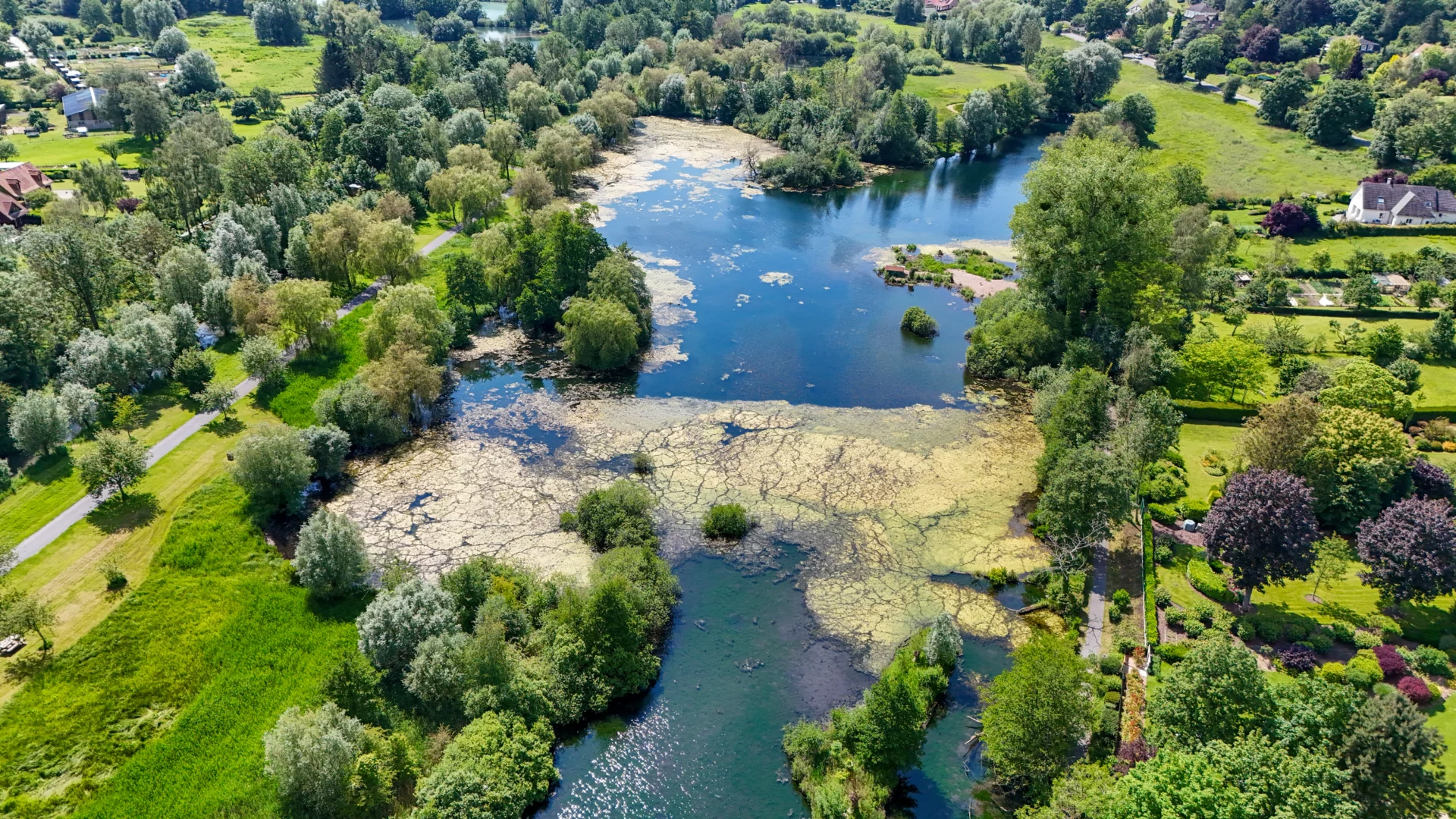
As a result, the Sainte-Croix wetland is now the town’s “green lung.” The site was completely restored and opened to the public in 2013. It offers everyone the chance to recharge while enjoying a wooden boardwalk that leads to several observation points from which visitors can discover the area’s unique flora and fauna.
In partnership with the Communauté de Communes des Villes Sœurs, a path dedicated to pedestrians and cyclists—the “Path Between Glass and Sea”— has been developed. It runs along the Penthièvre Canal, crosses the city’s largest natural areas, and offers a view of the green infrastructure that provides sustainable stormwater management.
More recently, a “sea garden” was created on the beach esplanade. The plants were chosen to symbolize the species found on the seafloor. They stand alongside traditional tools used by local fishermen.
Le Tréport is located at the gateway to the famous “Somme Bay,” ranked among the world’s most beautiful bays, and just a stone’s throw from the ancient royal town of Eu and its vast national forest. It is also the starting point of the GR 21, the hiking trail that runs along the entire coastline of Seine-Maritime.
Moffans is a village that was likely founded in the 17th century, during the era of large-scale land clearing, and stretches out around its imposing church, built of local pink sandstone.
Visitors can admire numerous buildings constructed in the 18th and 19th centuries: farmhouses, the town hall, washhouses, and mills. Moffans and Vacheresse—a hamlet that was incorporated in 1923—is an oasis of freshness and tranquility in the heart of a 680-hectare forest: there is no shortage of opportunities for walks along the hiking trails. Moffans is also a stop on the Franche-Comté Route des Villages Fleuris.
Fouesnant-les-Glénan, a vibrant region between the sea and the bocage
The Fouesnant region has everything it takes to offer its residents an exceptional quality of life, with its shimmering coastline, unspoiled natural environment, and a land-use policy designed to maintain a balance between respect for biodiversity and local life. The rich natural heritage that Fouesnant-les-Glénan is fortunate to possess is thus highlighted and preserved so that everyone can enjoy it.
Fouesnant-les Glénan is indeed a vibrant town, with a rich network of community organizations (nearly 140), a cultural hub, a water park, and numerous local shops and services for the whole family.
Fouesnant has a population of 10,008 and covers 3,300 hectares, including numerous natural areas. It boasts 17 kilometers of coastline—14 of which are beaches—as well as hiking trails, schools, shops and services, vibrant community organizations, and a warm welcome from its residents.
A wide variety of sites
Fouesnant-les-Glénan is, first and foremost, an exceptional natural site: 17 km of coastline, including 14 km of white-sand beaches, with three major areas: Beg-Meil—the oldest seaside resort in Fouesnant-les-Glénan, with its semaphore tower, coves, restaurants, bars, and crêperies—a little town within the town! The Pointe de Mousterlin, between the sea and the marshes: the Mer Blanche to the west and, to the east, the Mousterlin polder and beaches stretching as far as the eye can see. Cap-Coz, nestled between pine trees and the ria: a white-sand beach, perfect for the whole family, and on the other side, the Penfoulic cove, inviting you to take a stroll.
An archipelago: the Glénan Islands
A variety of protected natural sites:
– The mudflat and the Penfoulic Woods
– The Mousterlin Polder
– The White Sea Lagoon
– The Beg-Meil and Mousterlin Dunes
A well-preserved wooded landscape featuring a network of sunken paths lined with embankments planted with oak and chestnut trees.
Nestled in a natural setting where pine forests, ochre- and white-colored rocks, and vineyards—both on the plains and on terraced slopes—stretch all the way to the Mediterranean Sea, Cassis is protected by two natural landmarks: Cap Canaille (Europe’s highest sea cliff), which glows red in mistral winds, and the white limestone Calanques.
As part of the Calanques National Park, the municipality manages and develops its spaces, drawing inspiration from this exceptional natural environment.
Proud of its fourth flower, the town of Cassis hopes to continue this initiative and build on it to make this unique region even more beautiful.
Cassis: A Way of Life!
Making the Quality of Life a Collective Commitment
For more than 65 years, the Villes et Villages Fleuris certification has supported and recognized communities committed to creating a more pleasant, sustainable, and attractive living environment.
It promotes a comprehensive approach to the living environment: the role of greenery in public spaces, the preservation of biodiversity and resources, the quality of urban design, the enhancement of cultural heritage, resident engagement, and the city’s appeal to tourists.
For residents and visitors alike, the label serves as a mark of quality. It highlights municipalities that are committed to protecting their environment, their landscapes, and the quality of their living spaces.
For local communities, it serves as a dynamic and practical tool—both a methodology and a catalyst for progress—and is designed for the long term. It supports a path of continuous improvement, from 1 to 4 Flowers, while highlighting the identity and unique characteristics of each region.
Supported by the National Council of Villes et Villages Fleuris driven by a network of nearly 2,000 local experts, the certification program now brings together more than 4,700 municipalities around a shared goal: to make the living environment a driving force behind environmental and regional transitions.
The " Villes et Villages Fleuris " Award Villes et Villages Fleuris a Few Figures
Label News
Canicule et sécheresse : il est urgent de repenser l’espace public face aux défis climatiques
Our Partners