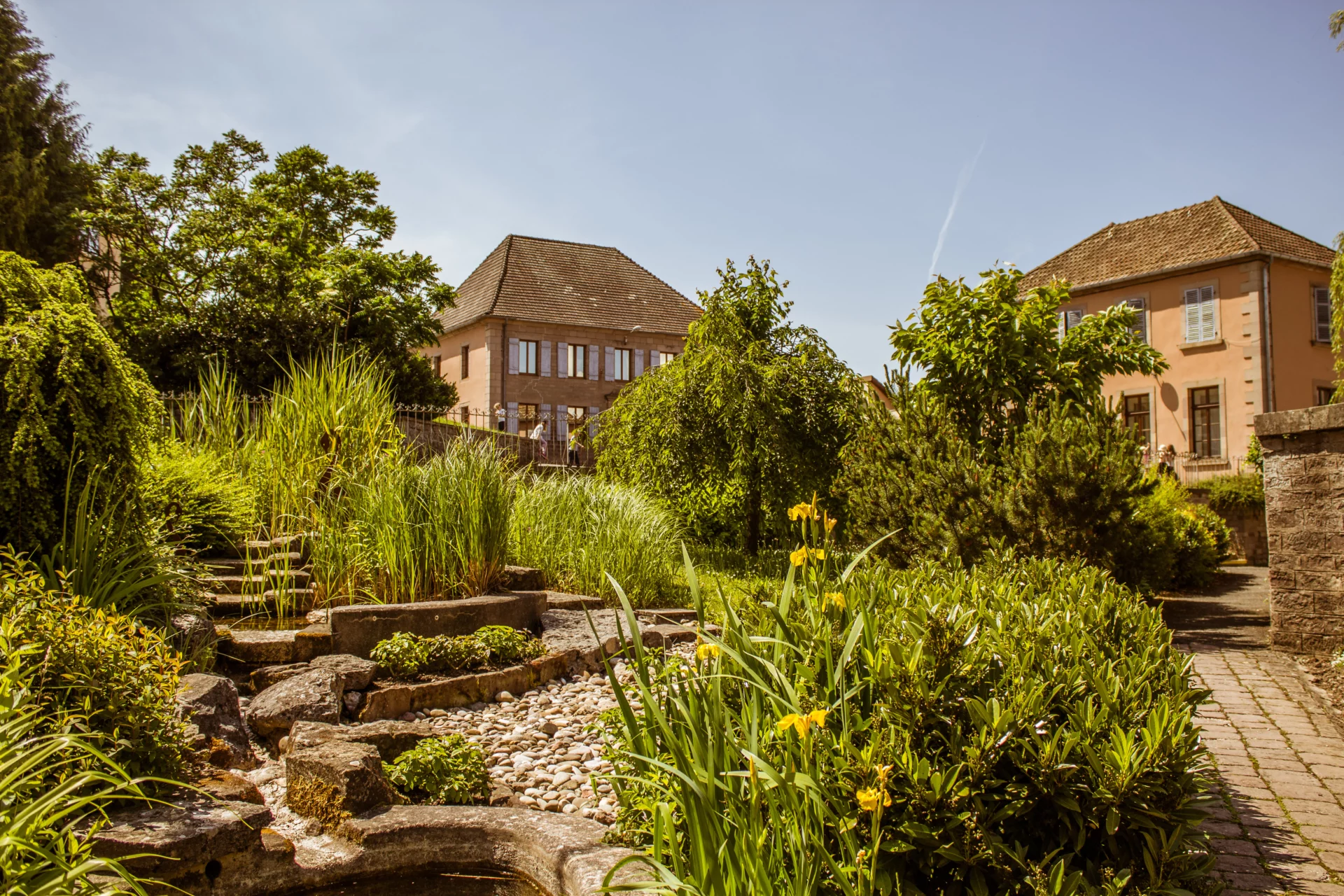

Moffans is a village that was likely founded in the 17th century, during the era of large-scale land clearing, and stretches out around its imposing church, built of local pink sandstone.
Visitors can admire numerous buildings constructed in the 18th and 19th centuries: farmhouses, the town hall, washhouses, and mills. Moffans and Vacheresse—a hamlet that was incorporated in 1923—is an oasis of freshness and tranquility in the heart of a 680-hectare forest: there is no shortage of opportunities for walks along the hiking trails. Moffans is also a stop on the Franche-Comté Route des Villages Fleuris.
Fouesnant-les-Glénan, a vibrant region between the sea and the bocage
The Fouesnant region has everything it takes to offer its residents an exceptional quality of life, with its shimmering coastline, unspoiled natural environment, and a land-use policy designed to maintain a balance between respect for biodiversity and local life. The rich natural heritage that Fouesnant-les-Glénan is fortunate to possess is thus highlighted and preserved so that everyone can enjoy it.
Fouesnant-les Glénan is indeed a vibrant town, with a rich network of community organizations (nearly 140), a cultural hub, a water park, and numerous local shops and services for the whole family.
Fouesnant has a population of 10,008 and covers 3,300 hectares, including numerous natural areas. It boasts 17 kilometers of coastline—14 of which are beaches—as well as hiking trails, schools, shops and services, vibrant community organizations, and a warm welcome from its residents.
A wide variety of sites
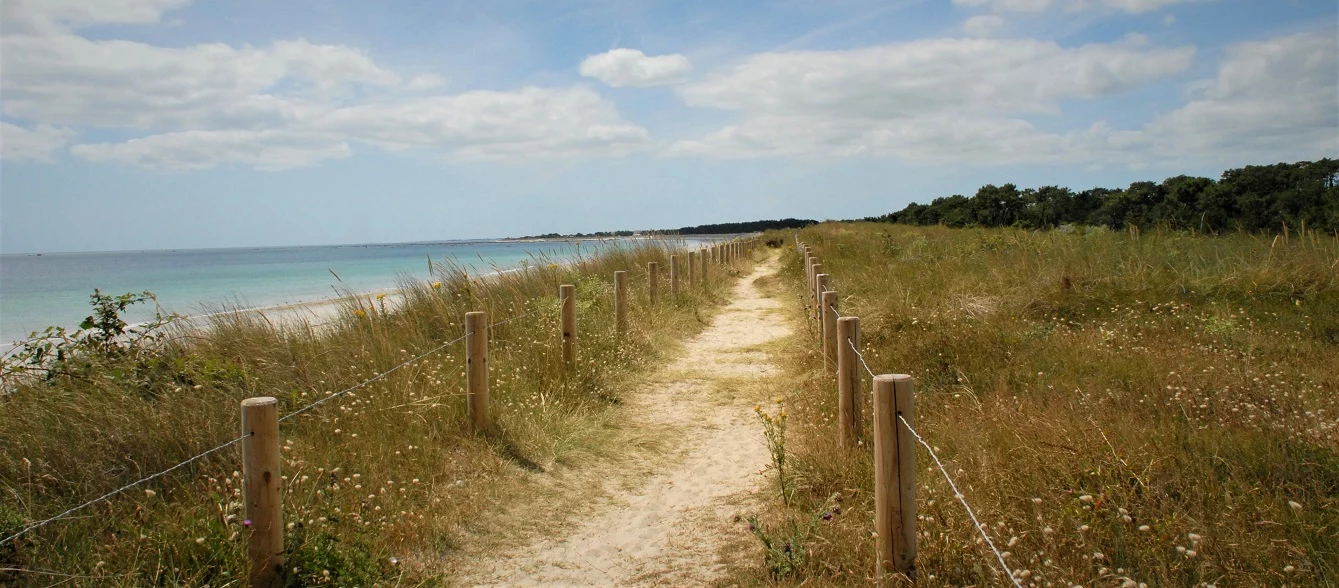
Fouesnant-les-Glénan is, first and foremost, an exceptional natural site: 17 km of coastline, including 14 km of white-sand beaches, with three major areas: Beg-Meil—the oldest seaside resort in Fouesnant-les-Glénan, with its semaphore tower, coves, restaurants, bars, and crêperies—a little town within the town! The Pointe de Mousterlin, between the sea and the marshes: the Mer Blanche to the west and, to the east, the Mousterlin polder and beaches stretching as far as the eye can see. Cap-Coz, nestled between pine trees and the ria: a white-sand beach, perfect for the whole family, and on the other side, the Penfoulic cove, inviting you to take a stroll.
An archipelago: the Glénan Islands
A variety of protected natural sites:
– The mudflat and the Penfoulic Woods
– The Mousterlin Polder
– The White Sea Lagoon
– The Beg-Meil and Mousterlin Dunes
A well-preserved wooded landscape featuring a network of sunken paths lined with embankments planted with oak and chestnut trees.
Located in the heart of the Cambrésis region, Caudry combines the charm of a high-tech town with the rich heritage of a city steeped in history and tradition. Awarded the “City of Arts and Crafts” designation in 1995 and the “City of Flowers” designation in 2003, the City of Lace has successfully preserved and developed its industrial heritage by attracting major companies (SICOS, L’Oréal Group, SPAC Nestlé, and Lenglet), ensuring the continuity of its traditional craftsmanship and using it as a means of promotion and a driver of economic development. You’ll be captivated by the town’s artistic and cultural treasures. The Sainte-Maxellende Basilica, the Caudrésien Museum of Lace and Embroidery, the “Le Millénium” Movie Theater, the Theater, the Recreation Center, the Maison des Arts, and the natural areas…
The town has held the “3 Flowers” designation for many years and has won several awards from Côte-d’Or Tourisme (thematic flower display in 2015, the “Young Gardeners’ Contest” in 2017, the “#EpiquesEpoques” Trophy in 2018), including the “Municipality of the Year” Trophy in 2016 for the successful transition from flower displays relying heavily on annuals to displays featuring more perennial plants and well-designed landscaping—we have never rested “on our laurels .” We wanted to embrace the label’s guidelines to enhance our landscape and, above all, to help foster a shift in attitudes through how our fellow citizens perceive public spaces.
It’s not always easy, and there’s still some resistance: “The sidewalk is full of weeds; it’s dirty…”; yet it is through action, dialogue, and determination that, step by step, we’re asserting our role in convincing people and gaining their support for these essential changes. Our efforts to inform and raise awareness continue, and municipal employees from the Quality of Life Department serve as direct and key points of contact for the public. Consequently, they must be actively involved so they are always better equipped to provide solutions.
The City of Buffon is implementing a variety of projects aimed not only at making these areas safer but also at enhancing their beauty and preserving their historical and natural heritage. In an effort to foster a broader discussion, the city council adopted, on June 27, the principle of joining and participating in the “Forêts de Notre Dame” project.
Vincent MAYOT, a landscape architect from Burgundy, launched the idea—taken up and expanded upon by Gilles CLEMENT, “the committed gardener” and professor at the École Nationale Supérieure du Paysage in Versailles—to set aside the footprint of Notre-Dame Cathedral for nature in each of France’s 36,000 municipalities. Under the project title “Forêts de Notre-Dame,” Vincent MAYOT mapped out the perimeter of the nave of Notre-Dame de Paris, which until April 15, 2019, was topped by a framework known as “la forêt” (the forest).
To mark the post-fire era—“this unique moment in our history”—the designer proposes letting nature and time do their work of regeneration, to create a biodiversity reservoir measuring 36,000 by 6,000 m², or a mosaic of 216 km² of primary forests, bearing witness to the Anthropocene. We have agreed to the principle of designating a forested area of approximately 6,000 m² as a biodiversity reserve. As one of the first municipalities in France—if not the first—to commit to this project, we see this as a symbolic yet concrete step that allows us to do our part.
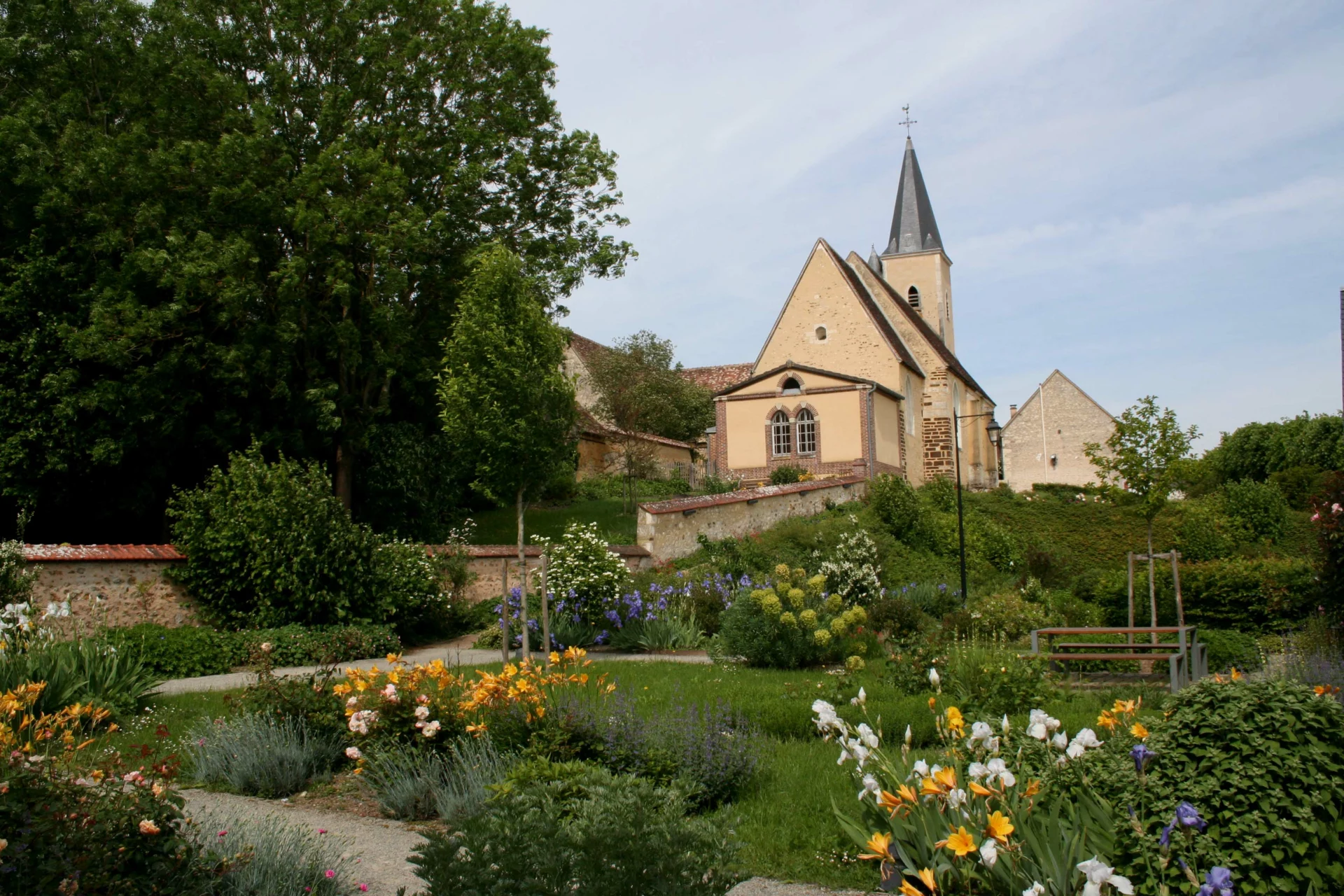
Located in the heart of the Perche Regional Nature Park, the town of Trizay Coutretôt Saint Serge (population 466)—which was consolidated in 1835 and is home to three manor houses listed on the inventory of historic monuments—continues to uphold its renowned traditions of quality of life, hospitality, privacy, safety, and peace on the outskirts of Nogent-le-Rotrou.
The gradual beautification of the town’s environment through ongoing improvements to public spaces and the planting of flowers helps promote and reinforce its image as a beautiful town where life is good, along the Berthe Valley (classified as a Category 1 fishing area).
Environmental Management and the Quality of Public Spaces
These remained the two priorities from 2019 to 2022.
- Completion of work to bury overhead utility lines in the town of Trizay.
- Restoration work begins on the area surrounding the Trizay Church.
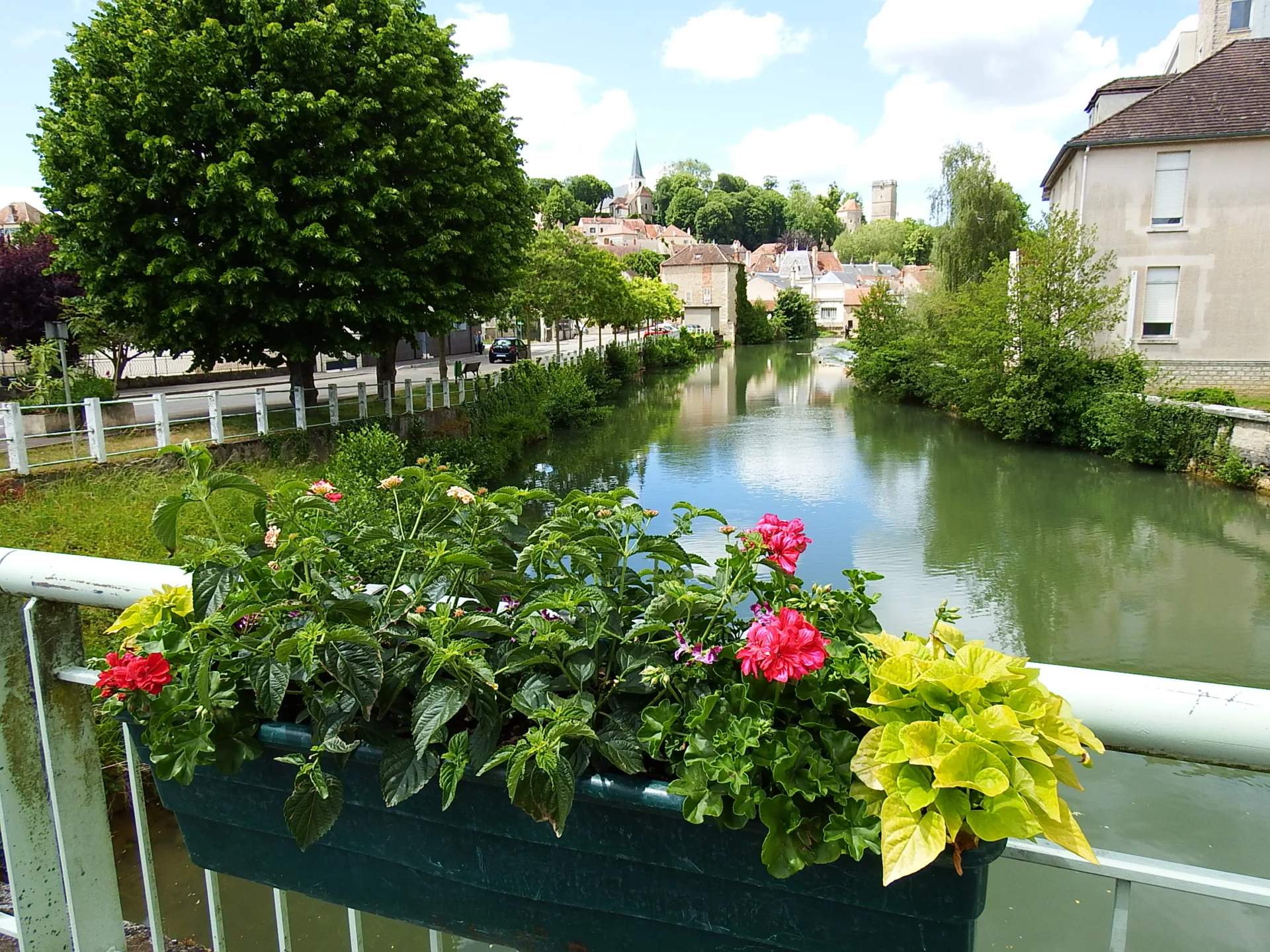
- Continued efforts to enhance the historic district of the village of Trizay: a true “community hub” featuring its municipal guesthouse, two community halls for celebrations, a recreation and sports field, the town hall gardens, the riverbanks, the washhouses, and the bridges spanning the “Berthe.”
- Planting water-efficient plants by mulching flower beds.
- Removal of all unauthorized billboards.
- Garden waste disposal (recycling center 1 km away) and compost bins provided upon residents' request.
Promoting Beautification
The initiative is primarily promoted among residents through “the community’s example” and by encouraging them to “plant flowers in front of their homes,” with the goal of creating a high-quality environment.
Promotional efforts also continue to target hikers and visitors through the town’s website.
Like the preservation of the built heritage, the floral displays help attract large numbers of tourists (the Métairie guesthouse) and contribute to the success of community festivals.
For example, the “100 km du Perche” event (a hiking festival recognized by the French Hiking Federation) brings together more than 600 people every year, who come from all regions of France and hike along all the trails and through all the public spaces in the municipality.
Similarly, many cycling tourists traveling along the “Véloscénie” stop in Trizay (to rest at the community guesthouse and in the community gardens).
Progress of the Flowering Season
Continuation of ongoing efforts to plant flowers and beautify the local environment for the years 2022 through 2026: Focus on the town entrances and the “Hameau du Chêne” housing development, a rural-style community featuring green spaces and natural walking paths.


Making the Quality of Life a Collective Commitment
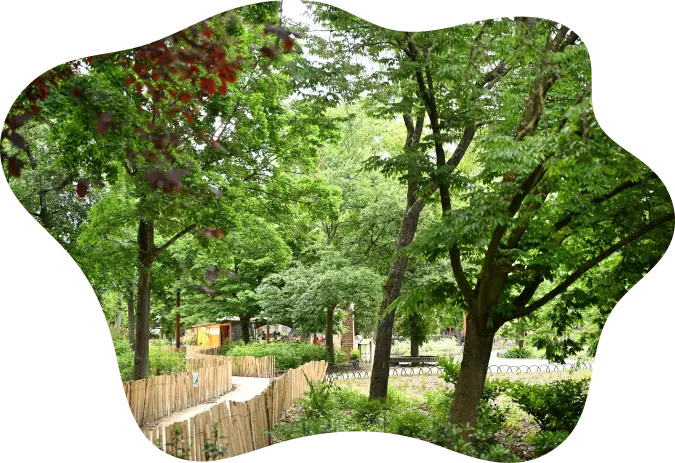
For more than 65 years, the Villes et Villages Fleuris certification has supported and recognized communities committed to creating a more pleasant, sustainable, and attractive living environment.
It promotes a comprehensive approach to the living environment: the role of greenery in public spaces, the preservation of biodiversity and resources, the quality of urban design, the enhancement of cultural heritage, resident engagement, and the city’s appeal to tourists.
For residents and visitors alike, the label serves as a mark of quality. It highlights municipalities that are committed to protecting their environment, their landscapes, and the quality of their living spaces.
For local communities, it serves as a dynamic and practical tool—both a methodology and a catalyst for progress—and is designed for the long term. It supports a path of continuous improvement, from 1 to 4 Flowers, while highlighting the identity and unique characteristics of each region.
Supported by the National Council of Villes et Villages Fleuris driven by a network of nearly 2,000 local experts, the certification program now brings together more than 4,700 municipalities around a shared goal: to make the living environment a driving force behind environmental and regional transitions.

The " Villes et Villages Fleuris " Award Villes et Villages Fleuris a Few Figures



Label News
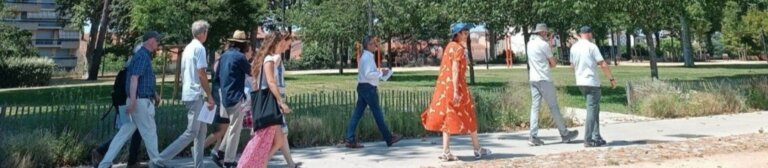
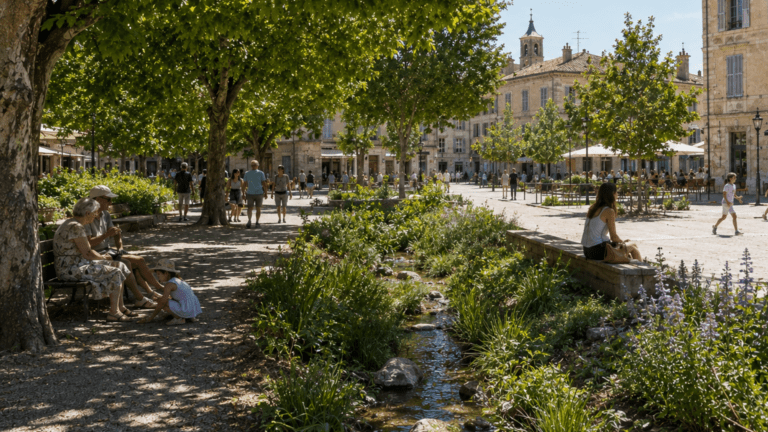
Canicule et sécheresse : il est urgent de repenser l’espace public face aux défis climatiques
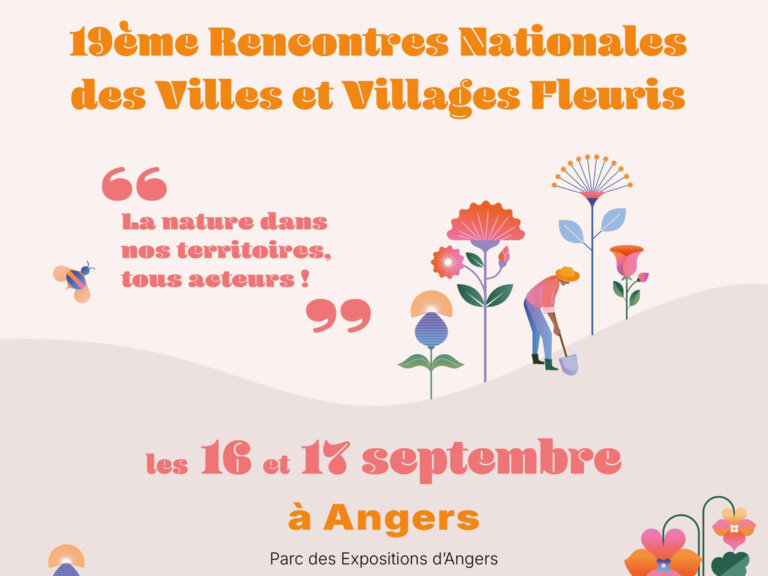
Our Partners