

After several years of absence, France—through the CNVVF—is making a comeback in the Entente Florale Européenne competition.
The European Entente Florale is an international nonprofit organization whose mission is to promote the sustainable development of cities and villages across Europe, with the goal of improving residents’ quality of life. Each member country nominates a city or village, which is then visited and evaluated by an international jury. Created in 1975 at the initiative of the United Kingdom and France, this competition is celebrating its 50th anniversary this year!
This participation reflects recognition of European local authorities’ commitments to an ecological transition that combines regional resilience with attractiveness. It also reinforces the label’s role as a tool for support, promotion, and local cooperation, working toward a sustainable living environment and the well-being of residents.
To represent France, the CNVVF has selected the cities of Nice, winner of the National Tree Award in 2023, and Nantes, winner of the Educational and Civic Action Award and the National Tree Award in 2024.
The other European cities participating in the competition are: Babylon in the Czech Republic, Costigliole D’Asti in Italy, Huglfing and Zedtwitz in Germany, Maynooth and Terryglass in Ireland, Nyíregyháza and Varsany in Hungary, and Satu Mare in Romania.
The international jury, composed of members from the member countries, evaluates the candidate municipalities according to criteria based on the following considerations:
- Landscape and vegetation quality: seasonal and permanent plantings of flowers, trees, and shrubs; respect for the landscape and landscape policies; protection and promotion of biodiversity; and ecological management.
- Quality of the natural and built environment, including sustainable waste management, water management, heritage, and the quality of streets and buildings. Participation and cooperation of local volunteer organizations. The contribution and role of local authorities.
- Environmental education and other educational initiatives that promote the goals of the EFE.
- Policies to attract tourists and develop recreational facilities. Information and communication for residents and tourists.
The results will be announced at the awards ceremony on September 27.
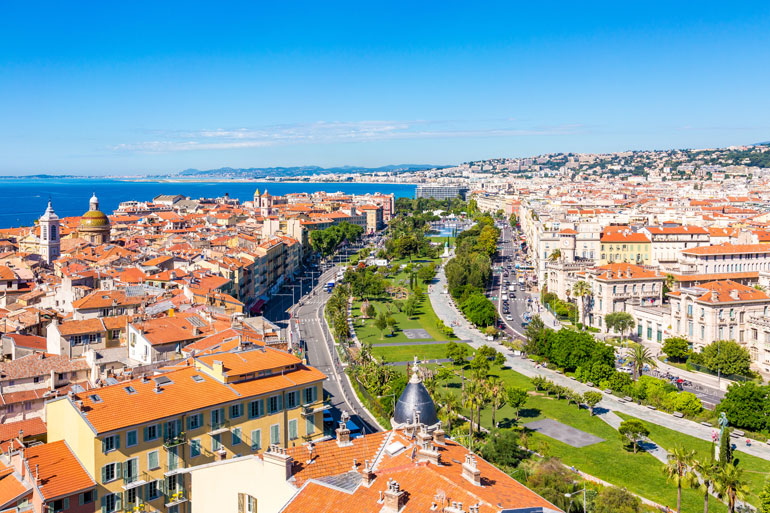
Nice, France’s fifth-largest city with a population of 353,700, enjoys a mild climate that allows for the cultivation of subtropical plants from around the world, along with a landscape redesigned in the 19th century—a combination that led to its recognition by UNESCO in 2021 as the “Winter Resort City of the Riviera.” Since 2008, the city has implemented an ambitious greening policy, creating more than 70 hectares of green spaces, including the Promenade du Paillon, green corridors replacing bus lanes that were converted to a tram line, and the Grand Parc in the Plaine du Var, among others. While Nice is already the city with more than 200,000 residents that has the highest proportion of tree-covered area in urban zones—at 33% and 53 m² per resident (Kermap study)—an additional 280,000 trees will be planted by 2026 to reach a ratio of one tree per resident.
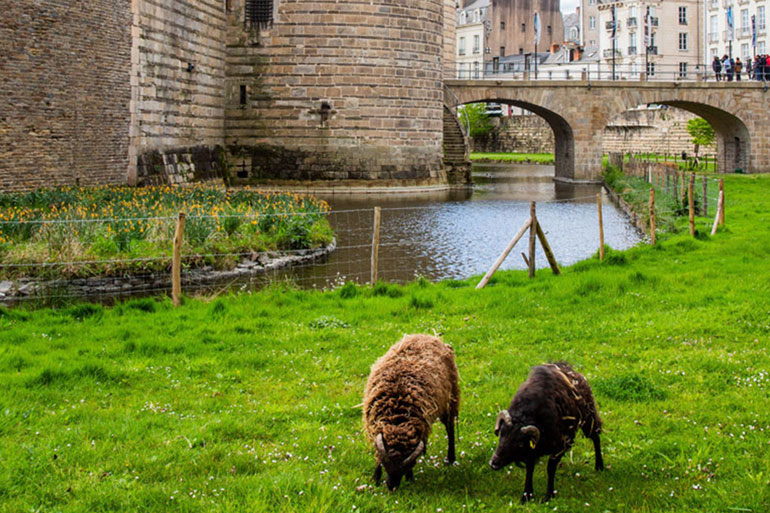
In Nantes, nature is everywhere: in the large parks, in the small gardens, in the green spaces, along the waterways… This is no coincidence: in Nantes, nature is an institution. It is part of the city’s history, present, and future. The City of Nantes showcases greenery wherever it can—in its large parks, of course, but also in all green spaces in general. Throughout the city, all residents are encouraged to garden, and biodiversity is preserved. Since 1980, Nantes has been one of the few French municipalities to be awarded the Villes et Villages Fleuris label Villes et Villages Fleuris The City of Nantes strives to maintain a balance between natural and urbanized spaces. With nearly 130 parks, squares, and gardens, Nantes has become a true “city in a garden.”